In Hobart, it’s easy to assume our cooler climate offers some protection from Australia’s high skin cancer rates.
But here’s the surprising part: Tasmania still records some of the world’s highest UV levels during summer.
Everyday exposure adds up quietly over time, even when the sun doesn’t feel strong.
At Treasury Medical in central Hobart, the doctors frequently see sun damage that developed slowly and without obvious warning signs.
Regular skin checks remain one of the simplest and most effective ways to detect issues early, when treatment is more successful, and less invasive.
Get the Gist is Seconds
In this article, you’ll learn:
- Hobart’s UV levels are stronger than you might think
- How skin cancer develops and why early detection matters
- What makes skin checks effective
- What to expect during a skin check at Treasury Medical
- How often to have a skin check
Hobart’s UV Levels Are Stronger Than You Might Think
Tasmania’s weather can be deceptive. Cool breezes and cloud cover often make it feel like the sun isn’t doing much harm, but UV radiation cuts straight through clouds, and you don’t feel it until damage occurs, e.g. sunburn.
Take a look at this article by the ABC, which explains why Tasmania’s sun feels harsher during the summer months, AND how UV is not linked to heat.
Put simply, you can still get significant sun damage long before you feel heat on your skin.
How Skin Cancer Develops and Why Early Detection Matters
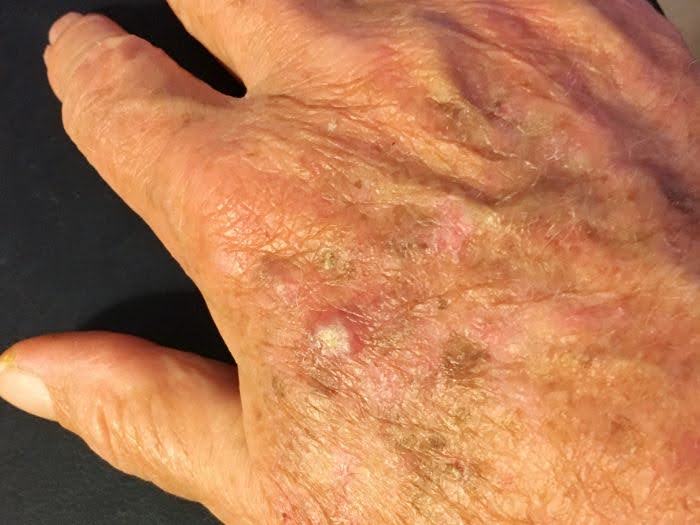
UV radiation can damage the DNA in skin cells.
Normally, the body repairs these cells, but repeated sun exposure can overwhelm repair mechanisms.
When this happens, abnormal cells start to grow and divide in an uncontrolled way, which can eventually form a tumour.
Over time, repeated exposure can lead to abnormal cell growth and:
- Basal cell carcinoma
- Squamous cell carcinoma
- Melanoma, the most serious form
See here for more information by Cancer Council Australia.
Early detection saves lives, which is why routine skin examinations are recommended for all adults, particularly if you have fair skin, a family history of melanoma, or significant past sun exposure.
What Makes Skin Checks Effective
These checks are effective as they help catch issues early, when treatment is simpler and more successful.
Detecting sun damage and skin issues early means the ability to treat them before they spread to other areas of the body. For example:
- If detected early, treatment might be a simple removal procedure, a small biopsy, or even just monitoring
- If NOT detected early, treatment could require more extensive excision, additional follow-up, or complex care
At Treasury Medical, skin checks are carried out within a calm, private and familiar environment, forming part of comprehensive long-term care.
Continuity of care is something we strongly believe in.
FYI: The estimated five-year survival rate when melanoma is detected early is over 99% (skincancer.org).
The survival rate falls to 74% when the disease reaches the lymph nodes, and just 35% when it reaches other organs.
How Skin Checks Work
Our doctors use:
- Clinical expertise, often the most important asset when conducting a skin check
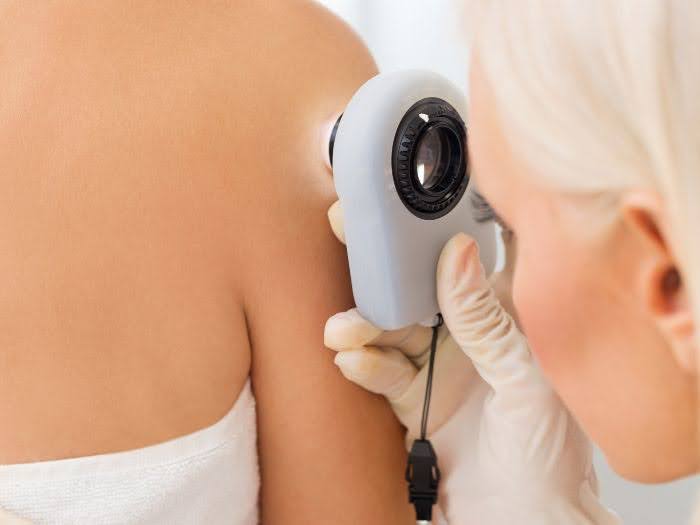
- Dermoscopy (a dermatoscope to closely examine the skin)
- Digital imaging when clinically helpful, currently provided within the practice by Dr Scott Finlayson using DermEngine
These tools help identify subtle changes that may not be visible to the naked eye.
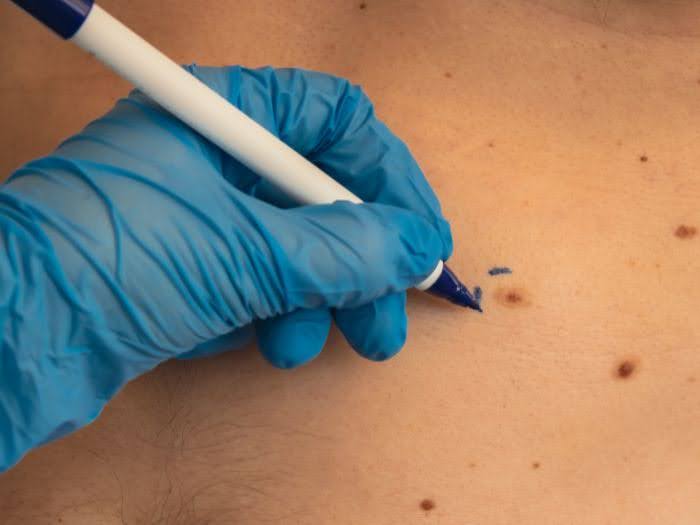
In a private consulting room, your doctor will view your skin, including spots you may have noticed yourself, in order to detect anything suspicious.
Skin checks are routine, simple, and painless.
What to Expect at Your Appointment
A typical appointment lasts around 20–25 minutes. During your skin check, your doctor will:
- Discussion. Your doctor asks about any new or changing spots and your skin history.
- Full-body examination. Your entire body is carefully checked in the consulting room. Naturally, you stay completely in control and can pause or stop at any time.
- Clinical assessment. Doctors use their expertise and dermoscopy, with digital imaging available when needed by Dr Scott Finlayson.
- Patient input. You can point out any spots or areas of concern.
- Next steps. If time permits perform a small biopsy under local anaesthetic if something looks suspicious, with results usually available within a couple of days. Otherwise this can be arranged in short order.
Many patients are surprised by how straightforward, calm and reassuring the experience is.
How Often Should You Have a Skin Check?
For most people, once a year is appropriate.
More frequent checks may be needed if you have:
- A history of melanoma
- Multiple moles
- Fair skin or other risk factors
- Significant past sun exposure
If you are ever unsure, earlier is always better. And don’t forget, we always want to know if you notice any changes between visits.
A Simple Step Toward Peace of Mind
Tasmania’s climate can be deceptive, but UV exposure here is strong enough to cause lasting damage.
A skin check is a practical, simple way to detect issues often before anything becomes serious, plus offering clarity and early intervention if needed.
Treasury Medical’s GPs provide careful, private and comprehensive skin checks as part of ongoing general practice in Hobart.
If you’re due, or not sure when your last check was, now is a good time to book.